
How to Practise Sa: A Step-by-Step Morning Riyaz Protocol
The exact Kharaj Sadhna routine followed by classical masters to develop depth, resonance, and endurance.
The morning hours between 5:00 AM and 7:00 AM are known in Indian tradition as Brahma Muhurta. For the classical vocalist, this is the sacred hour of Kharaj Sadhna (lower octave riyaz). Here is the protocol taught by Ankit Sharma at ASHCM:
Step 1: Calibration with the Tanpura (3 Minutes). Do not sing immediately upon waking. Sit with a straight spine, set your Tanpura drone (C# for male vocalists, G#/A# for female vocalists), and close your eyes. Listen to the four strings ringing: Pa, Sa, Sa, Sa. Let the harmonic envelope fill your acoustic space until your mind stops chattering.
Step 2: Abdominal Breathing Alignment (2 Minutes). Place one hand on your lower belly. Inhale slowly through your nose, letting your diaphragm expand downward. Do not raise your shoulders. Exhale on a gentle, unvoiced “ssss” sound, feeling steady, pressurized air support.
Step 3: Finding Kharaj Sa (10 Minutes). On a comfortable exhalation, produce a warm, round “Akaar” on the middle Sa. Do not push for loudness. Instead, aim for tonal clarity—as if pouring warm oil into water. Hold the pitch steadily for 12 to 18 seconds without vibrato or wobble. Repeat 10 times.
Step 4: Descending into the Mandra Saptak (10 Minutes). Slowly glide down from Sa to Mandra Ni, Dha, and Pa using a continuous meend. Cultivate chest resonance. Never strain for notes lower than your voice comfortably reaches today; with daily practice, your lower range will naturally expand downward by 3 to 4 semitones.
Follow this protocol consistently for 40 days. You will notice that your voice develops an inner gravity, speech fatigue disappears, and high notes become effortless because your lower register is firmly rooted.
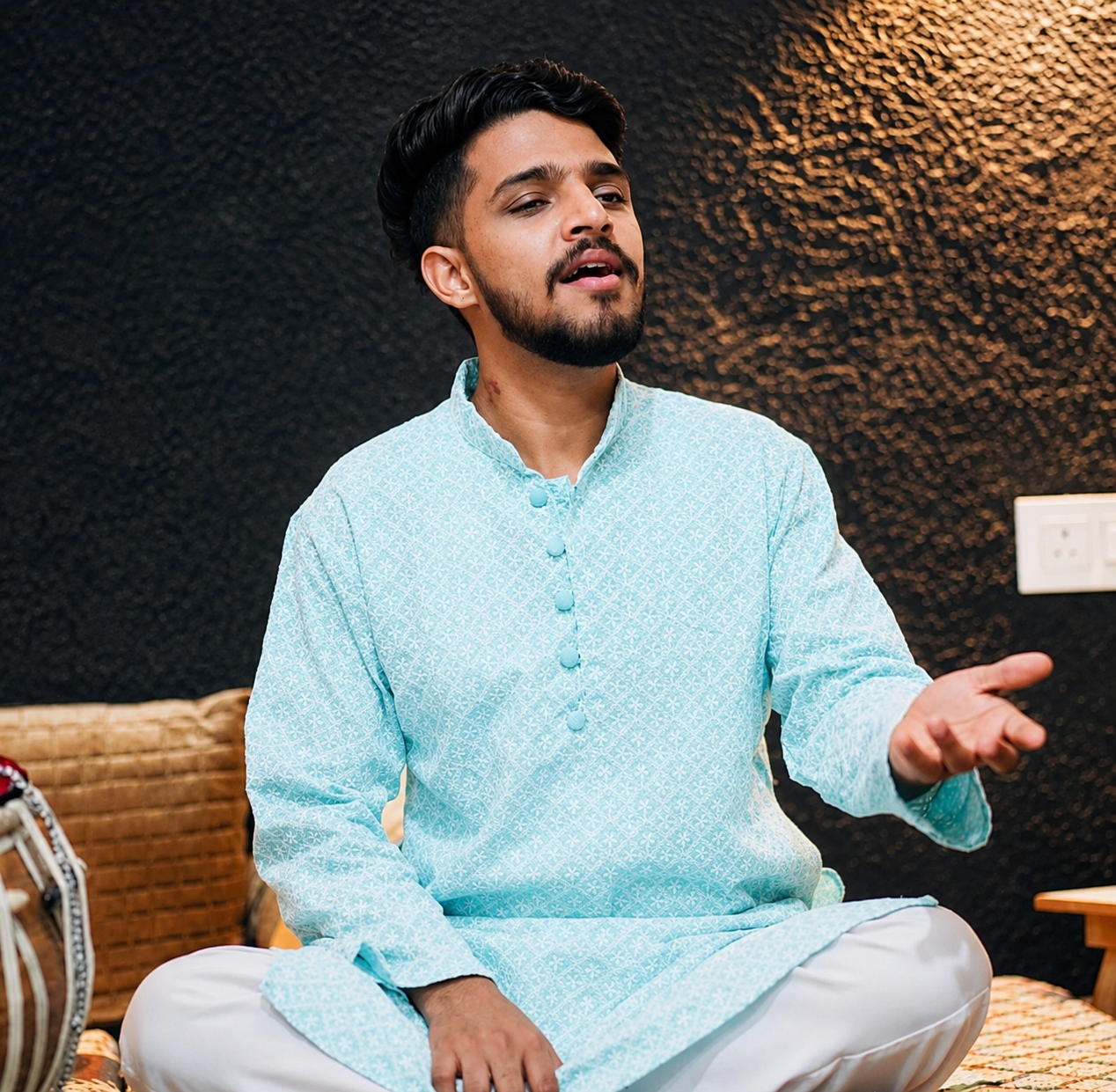
Written by Ankit Sharma
M.A. Music (Central University of Punjab, Bathinda) · Published Researcher in UGC CARE-listed journals. Teaching Hindustani vocal music in the tradition of Ustad Amir Khan Sahib.